
Check Engine Light On? Steady vs. Flashing and What to Do Next
Few things on the dashboard cause more worry than the check engine light. The good news is that it usually is not an emergency. The key is knowing which kind of light you are looking at, because a steady light and a flashing light mean very different things.
Steady light: get it checked soon
A check engine light that comes on and stays on means the engine computer has found a problem and stored a trouble code. The car is usually safe to drive for now, but you should have it checked within a few days. Ignoring a steady light can let a small problem, like a failing sensor, turn into a bigger one, like a damaged catalytic converter.
Flashing light: pull over when it is safe
A flashing check engine light usually means the engine is misfiring badly. Unburned fuel can go into the exhaust and overheat the catalytic converter, which is one of the most expensive parts on the car. If the light is flashing, reduce speed, avoid hard acceleration, and get off the road when it is safe. If the car shakes, loses power or smells like fuel, have it towed instead of driving it.
The most common causes
- Loose or damaged gas cap. It lets fuel vapor escape and sets an evaporative system code. Tighten it until it clicks. The light may take a few drives to go off.
- Oxygen sensor. These measure exhaust and help the engine set the fuel mix. A failing one hurts fuel economy.
- Spark plugs or ignition coils. Worn plugs or a bad coil cause misfires, rough idle and the flashing light described above.
- Mass airflow sensor. A dirty or failing sensor can cause hesitation and stalling.
- Catalytic converter. Often the result of another problem that went unfixed for too long.
- Vacuum leaks and EVAP leaks. Cracked hoses are common on older cars in Sacramento’s summer heat.
Why a code is not a diagnosis
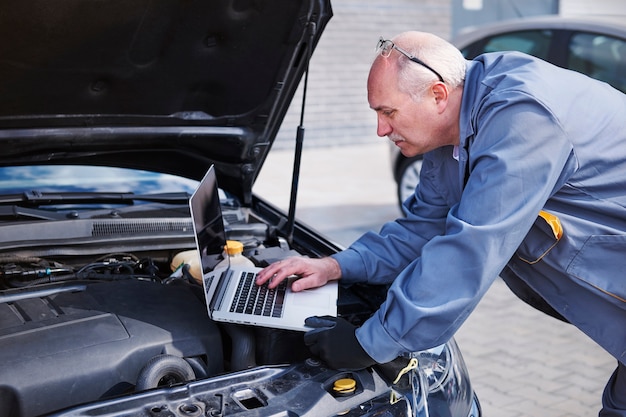
Many parts stores will read your trouble code for free. That is a useful first step, but a code only tells you which system reported a problem, not which part failed. A misfire code on cylinder 3, for example, could be a spark plug, a coil, an injector or a compression problem. Replacing parts based on the code alone is how drivers end up spending money on parts they did not need.
A proper diagnosis uses the code as a starting point, then checks live sensor data, tests the suspected parts and looks for the root cause. That is what our check engine light diagnostics service does.
What you can check yourself
- Note whether the light is steady or flashing, and when it came on.
- Check the gas cap.
- Watch other gauges. High temperature or low oil pressure warnings are more urgent than the check engine light.
- Notice how the car drives: shaking, hesitation, loss of power or new smells.
- Write it down. These details help the technician find the problem faster.
Will my car pass smog with the light on?
No. In California, a car with the check engine light on fails the smog check. Clearing the code right before the test does not work either, because the car’s readiness monitors reset and need time to complete. Fix the cause first, then drive normally for a while before testing.
European cars and electrical gremlins
BMW, Mercedes, Audi and Volkswagen models often need factory-level scan tools to read every module. If you drive one, see our European car repair page. If the check engine light comes with flickering lights or a weak battery, the cause may be electrical. Our auto electrical repair team can test the charging system too.
Get it checked in Rancho Cordova
MPB Auto Repair & Body Shop diagnoses check engine lights on all makes. We explain what we find in plain language and give you a free written estimate before any repair. Call (279) 218-7797 or visit 11432 Elks Cir, Ste B, Rancho Cordova.